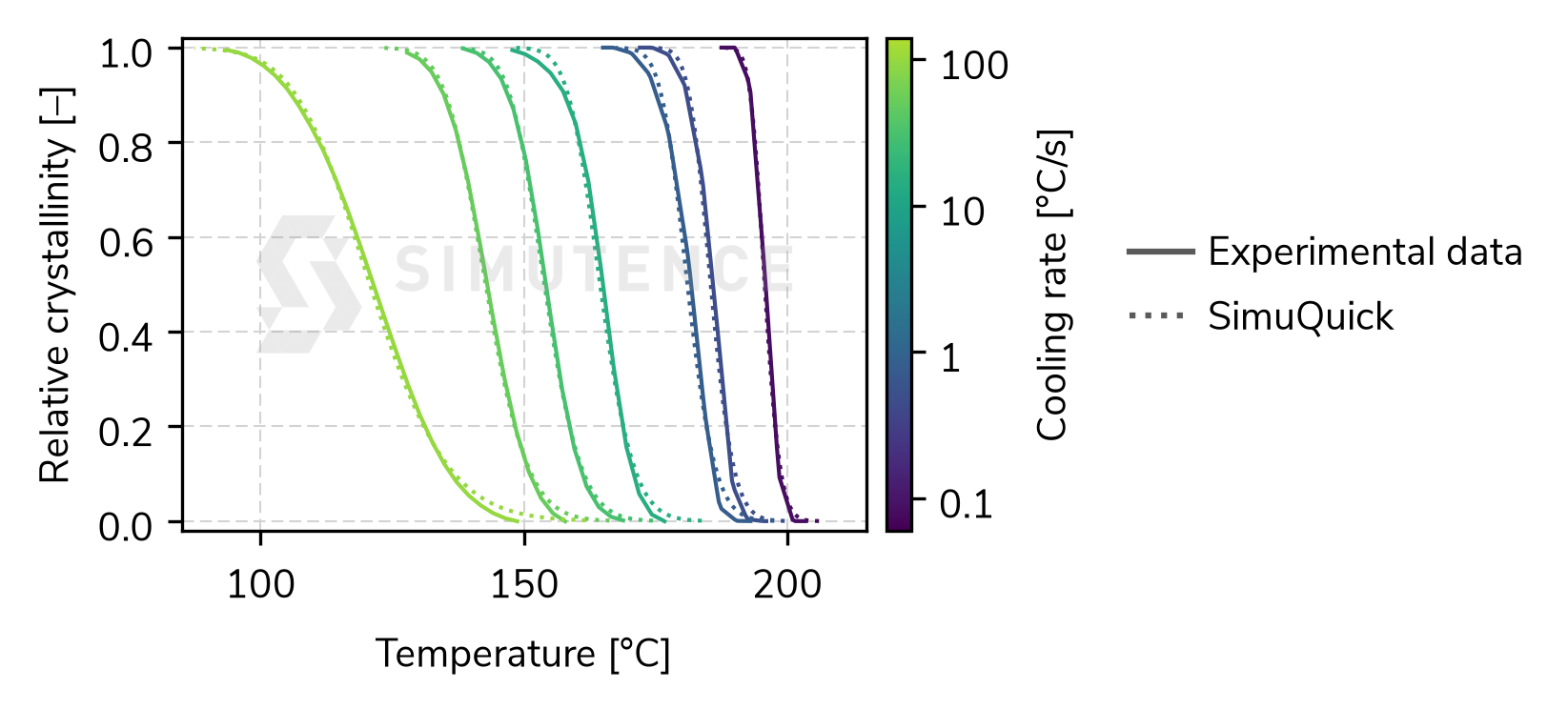
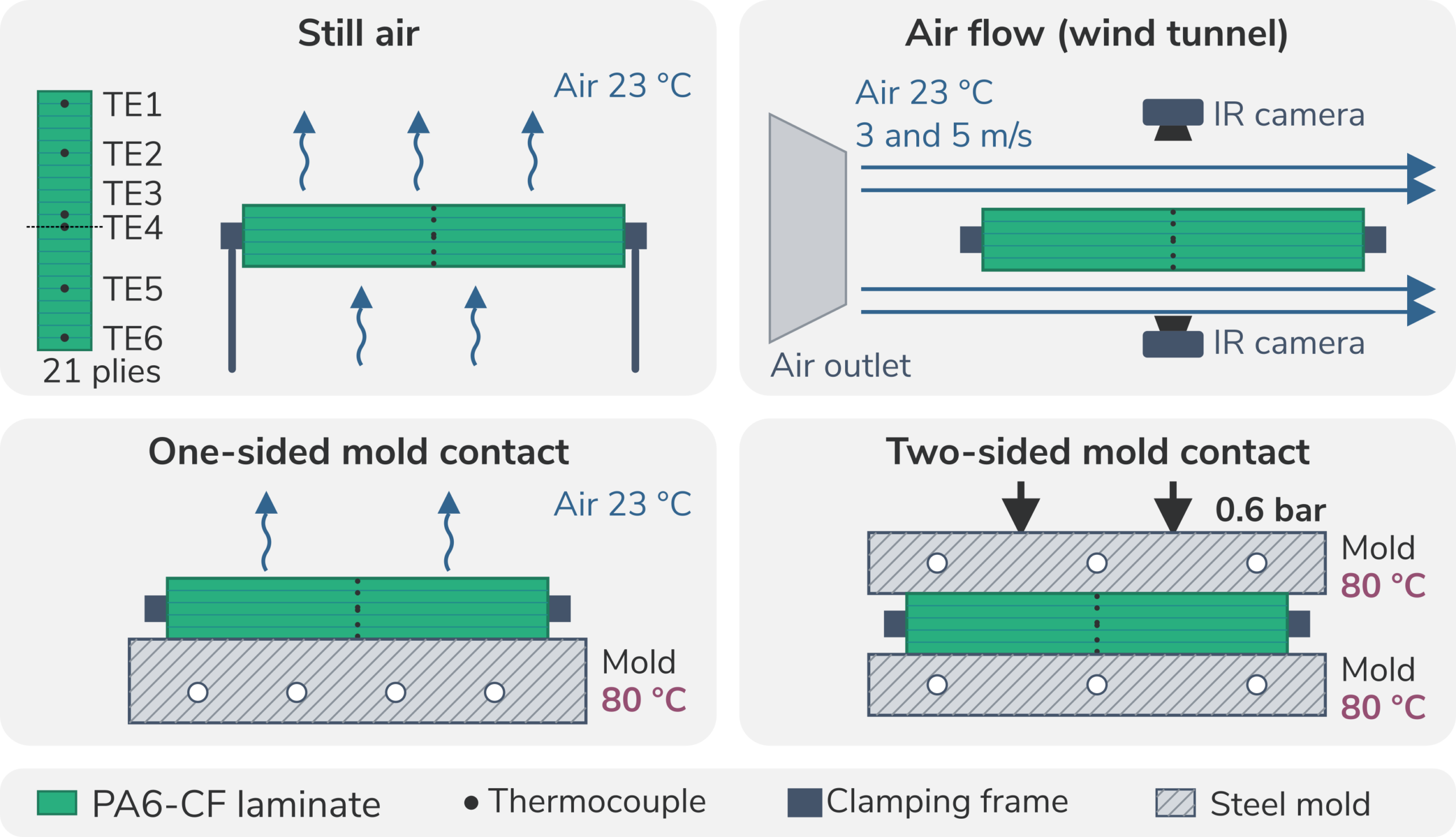
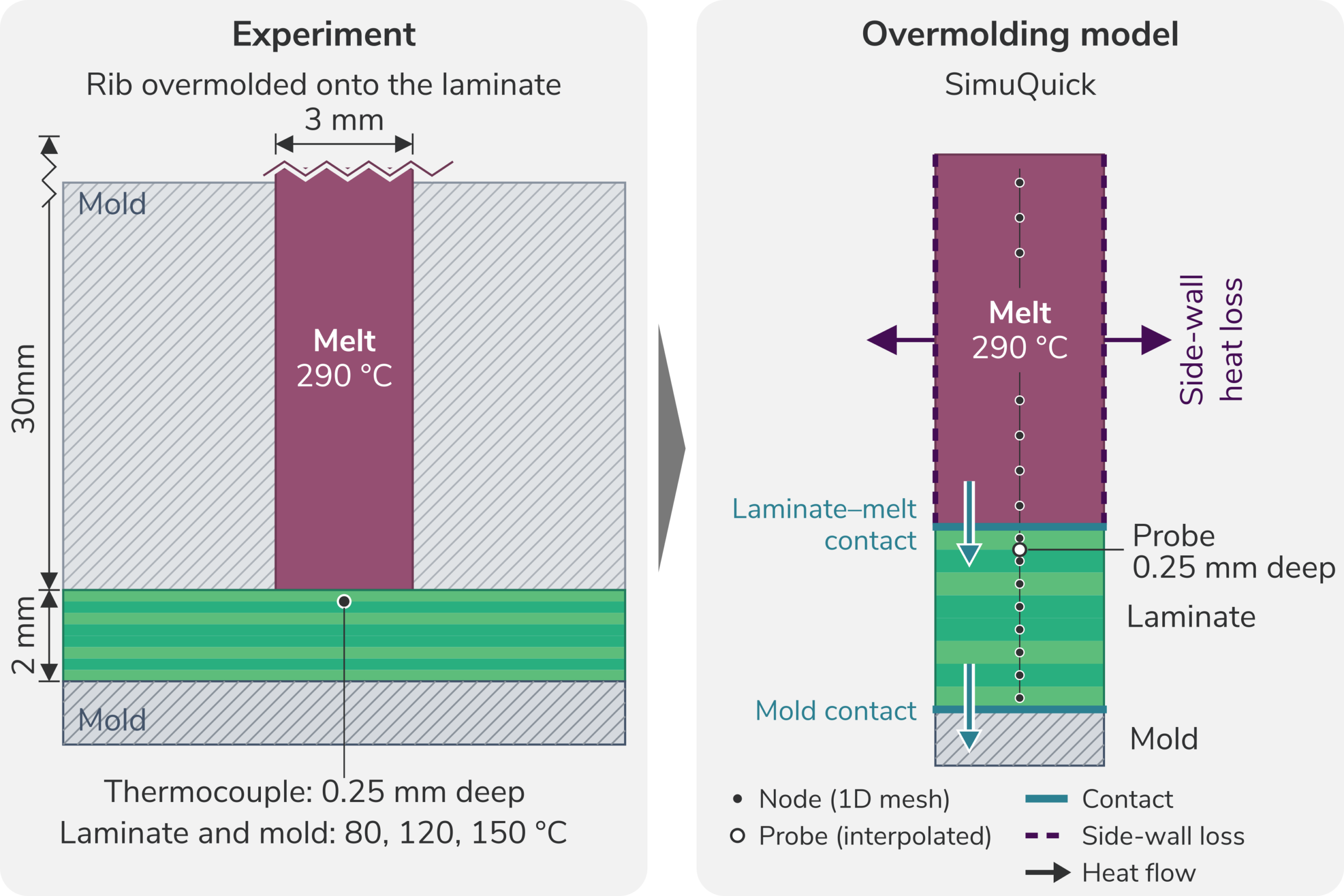
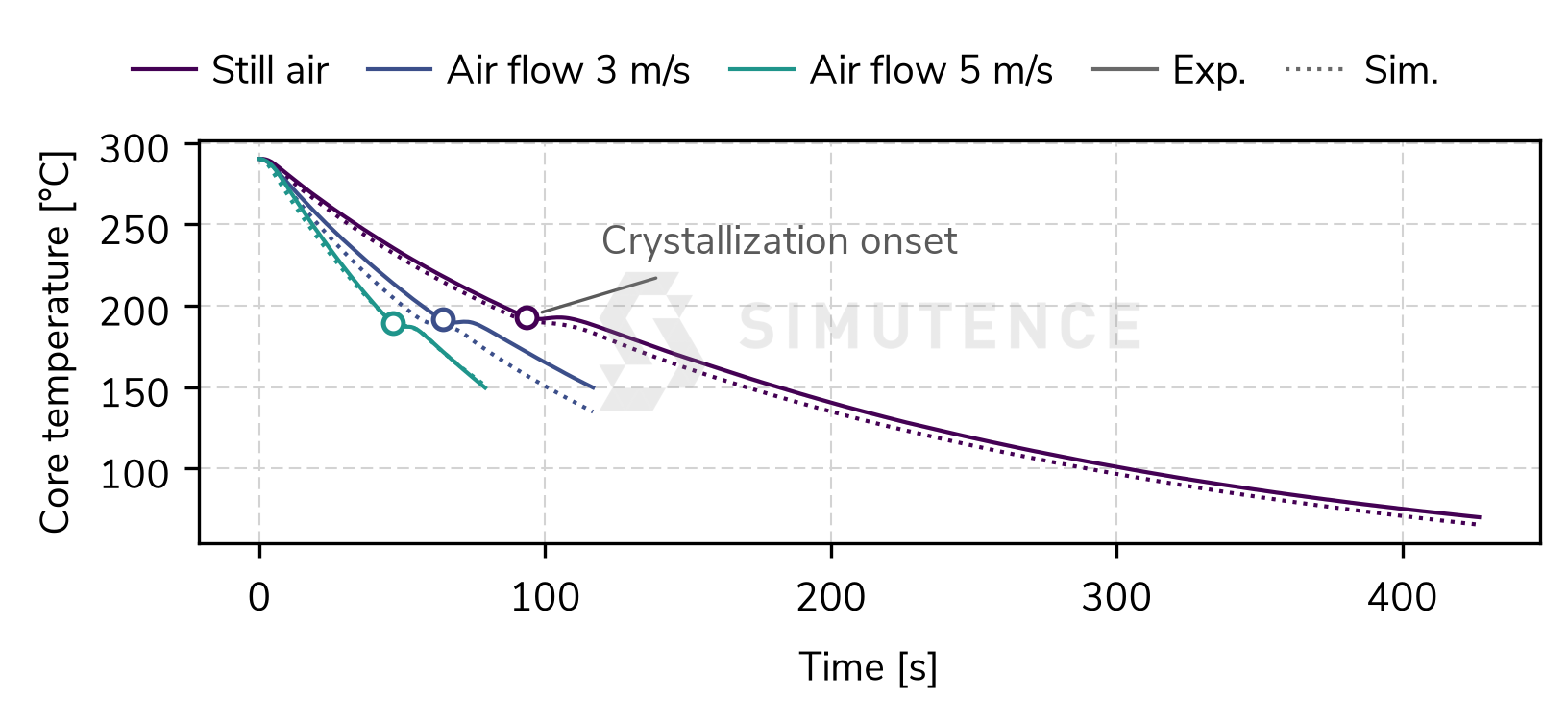
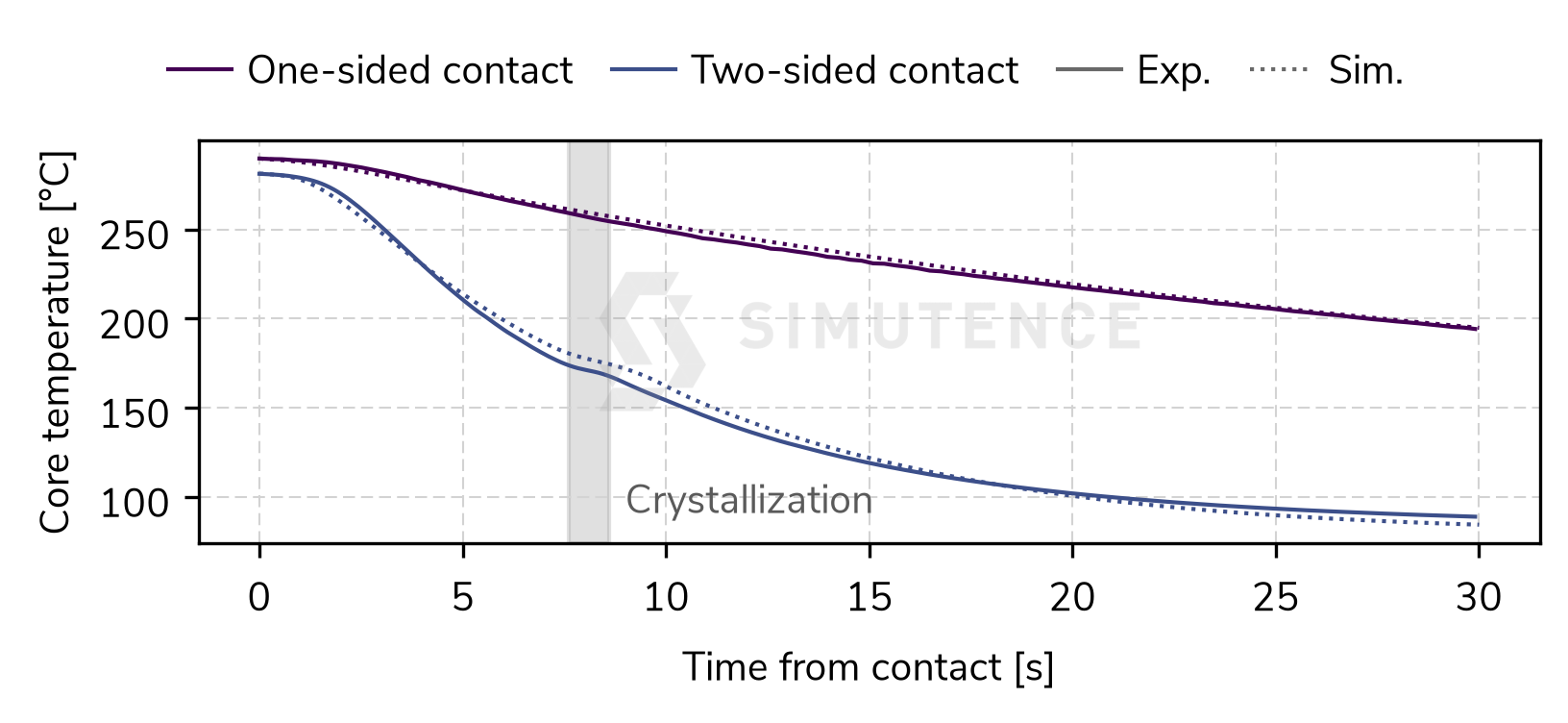
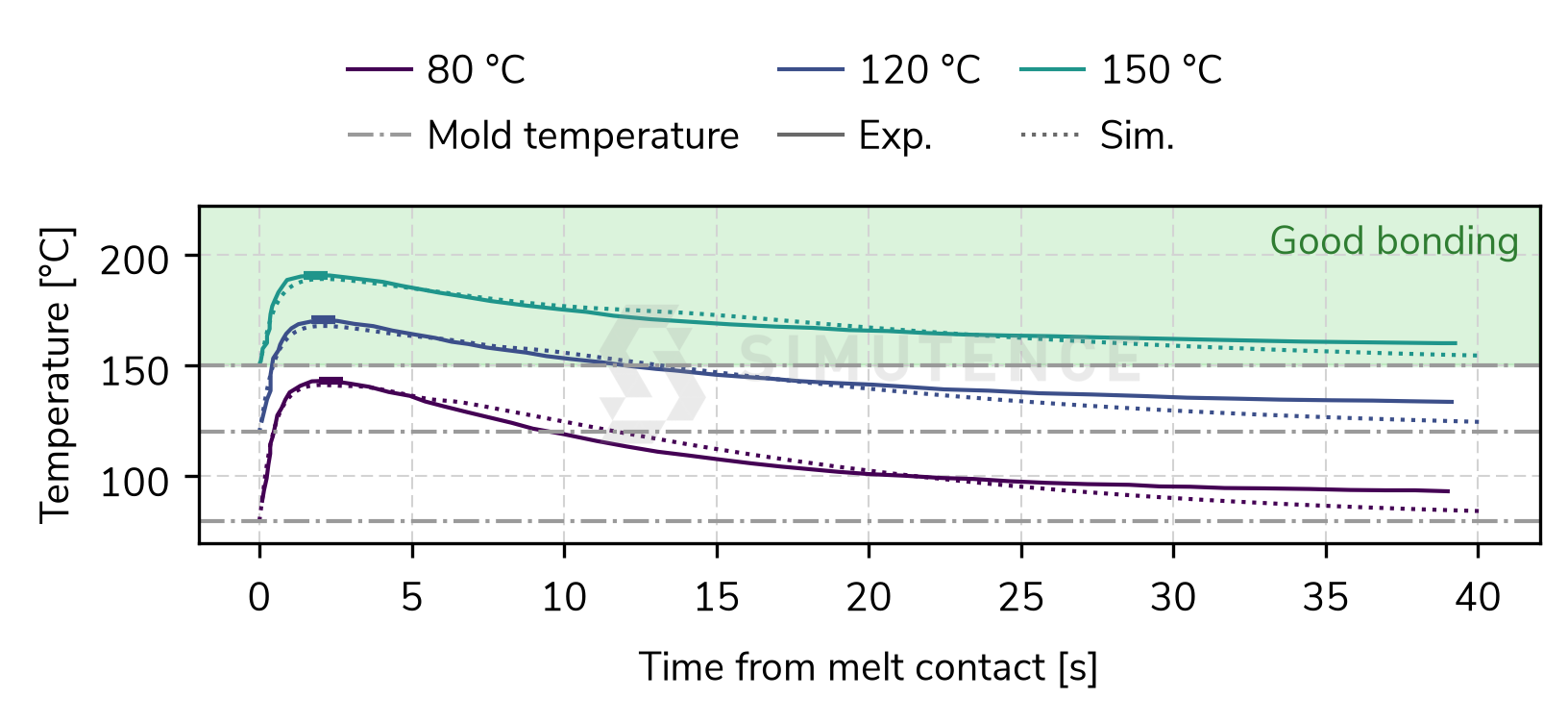
Simutence addresses the need for accurate, simple, and efficient prediction of temperature in the thermoforming and overmolding process with SimuQuick, its web application for real-time thermokinetic analyses on the Simutence Hub. SimuQuick’s Thermoforming Analysis feature computes temperature and relative or absolute crystallinity in a 1D model that resolves the laminate thickness. Relative crystallinity runs from 0 for the molten polymer to 1 for the solid one. The Thermoforming Analysis covers the heating in the oven, the transfer to the mold, open-mold cooling, and closed-mold cooling. SimuQuick accounts for convection, radiation, and the gap conductance between mold and laminate, which sets the heat flow across their contact.
The user enters the laminate thickness, the initial laminate temperature, the mold and environmental temperatures, and the time of each processing step. From the predicted temperatures, the user reads two key settings: how long the transfer may take before the laminate is too cold to be thermoformed, and how long the laminate must stay in the closed mold to crystallize. Because the analysis runs in real time, users can vary oven temperature, transfer time, or mold temperature in the browser and see the effect immediately, instead of running time- and cost-intensive trials on the line.
SimuQuick needs no advanced simulation knowledge. Materials come from a growing material database or from personal material cards, which keep confidential material data private. Besides tapes, the Thermoforming Analysis feature covers organosheets and glass mat thermoplastics (GMT), and the temperature before molding of long-fiber thermoplastics (LFT) in compression molding and of LFT-tape sandwiches.
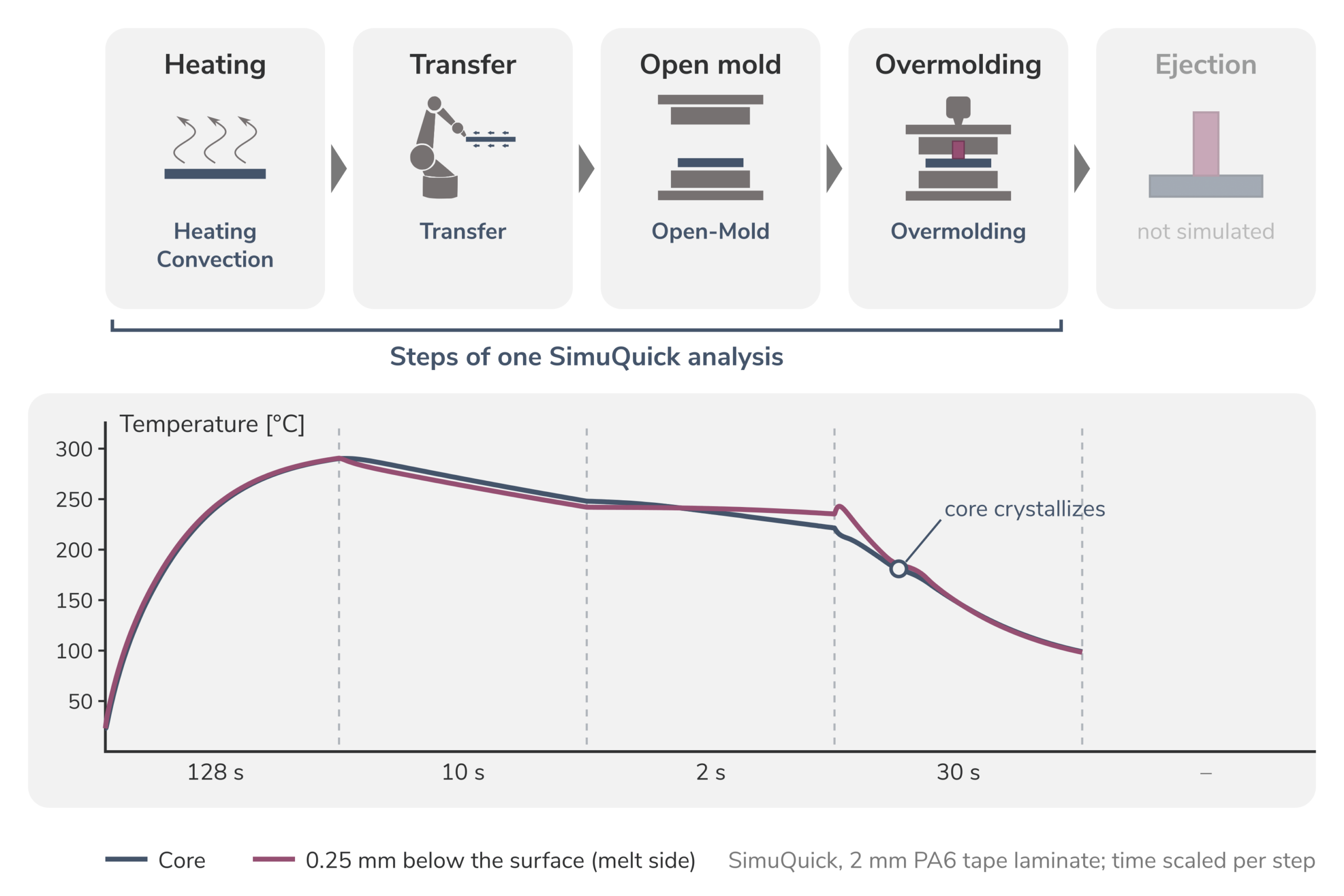
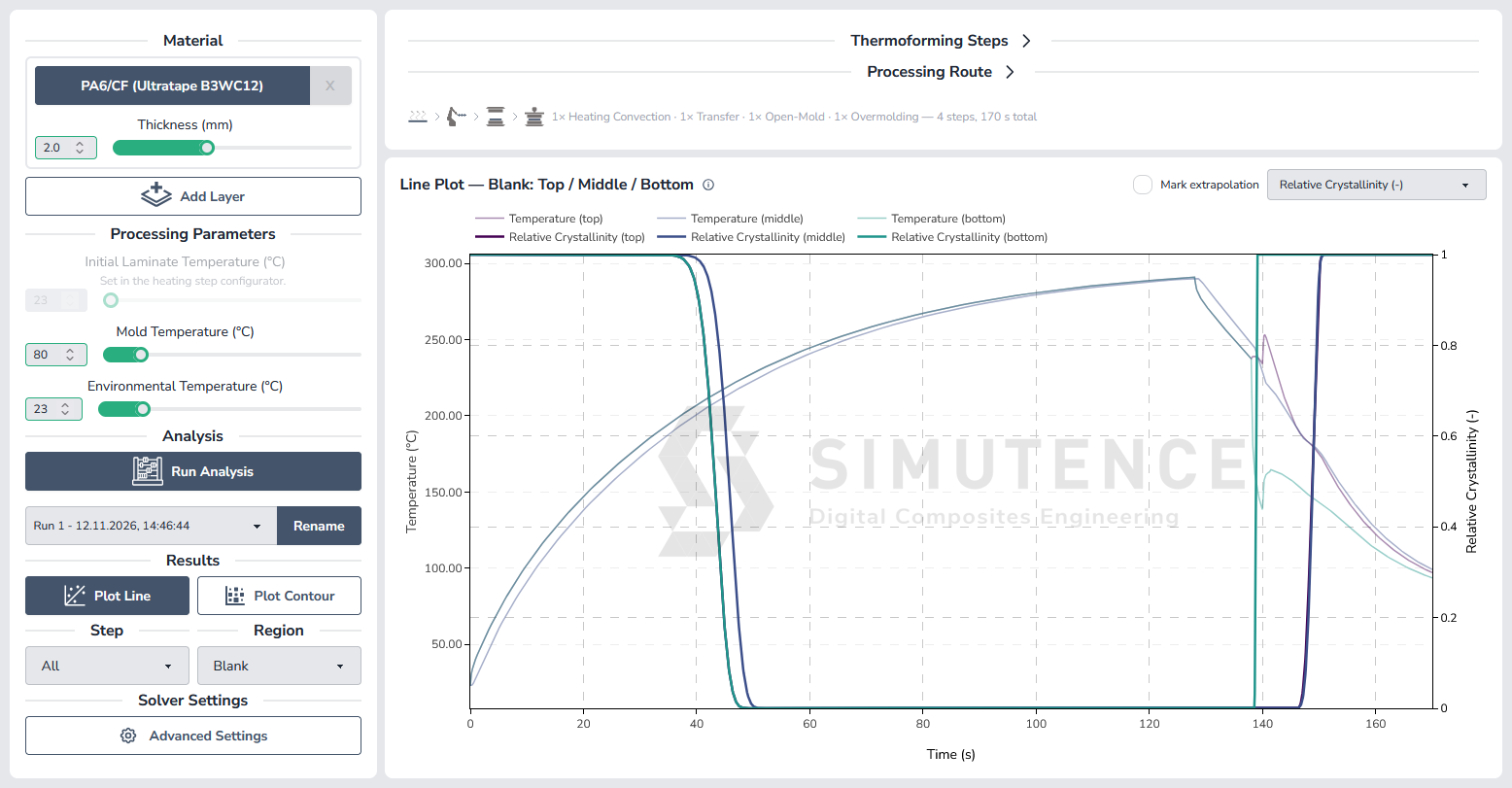
The screenshot shows the same process chain for a 2 mm laminate: 128 s in a 300 °C oven, 10 s transfer, 2 s in the open mold, and 30 s overmolding. Its core crystallizes in the mold at about 180 °C.