Motivation
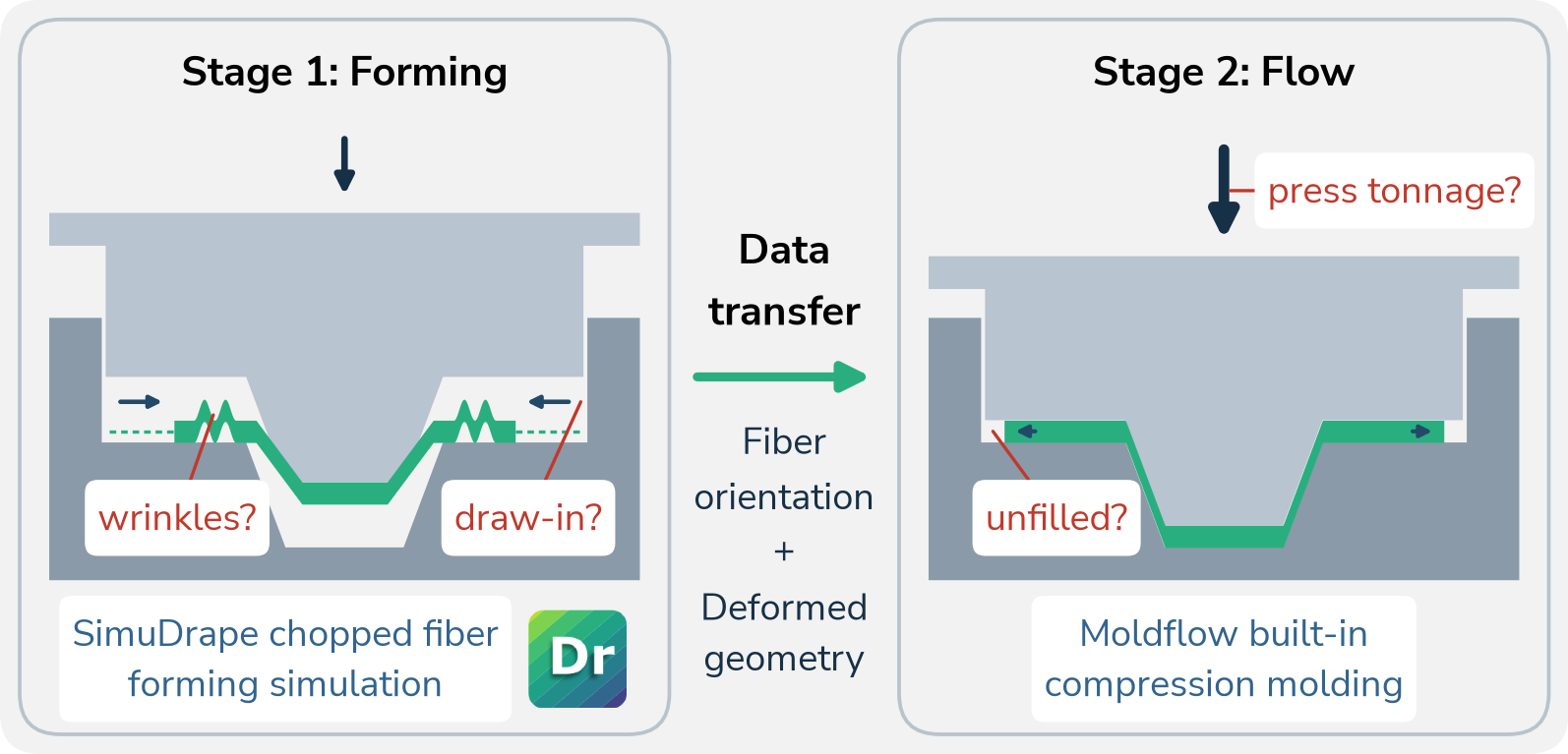
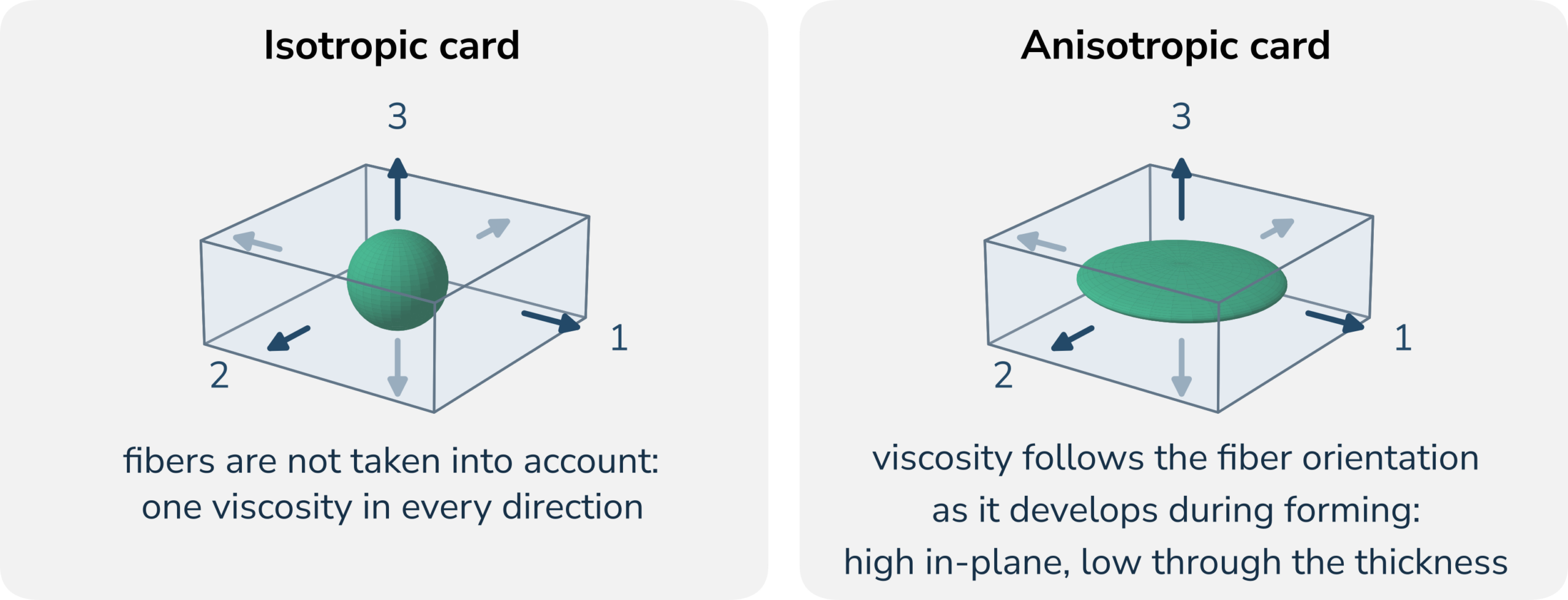
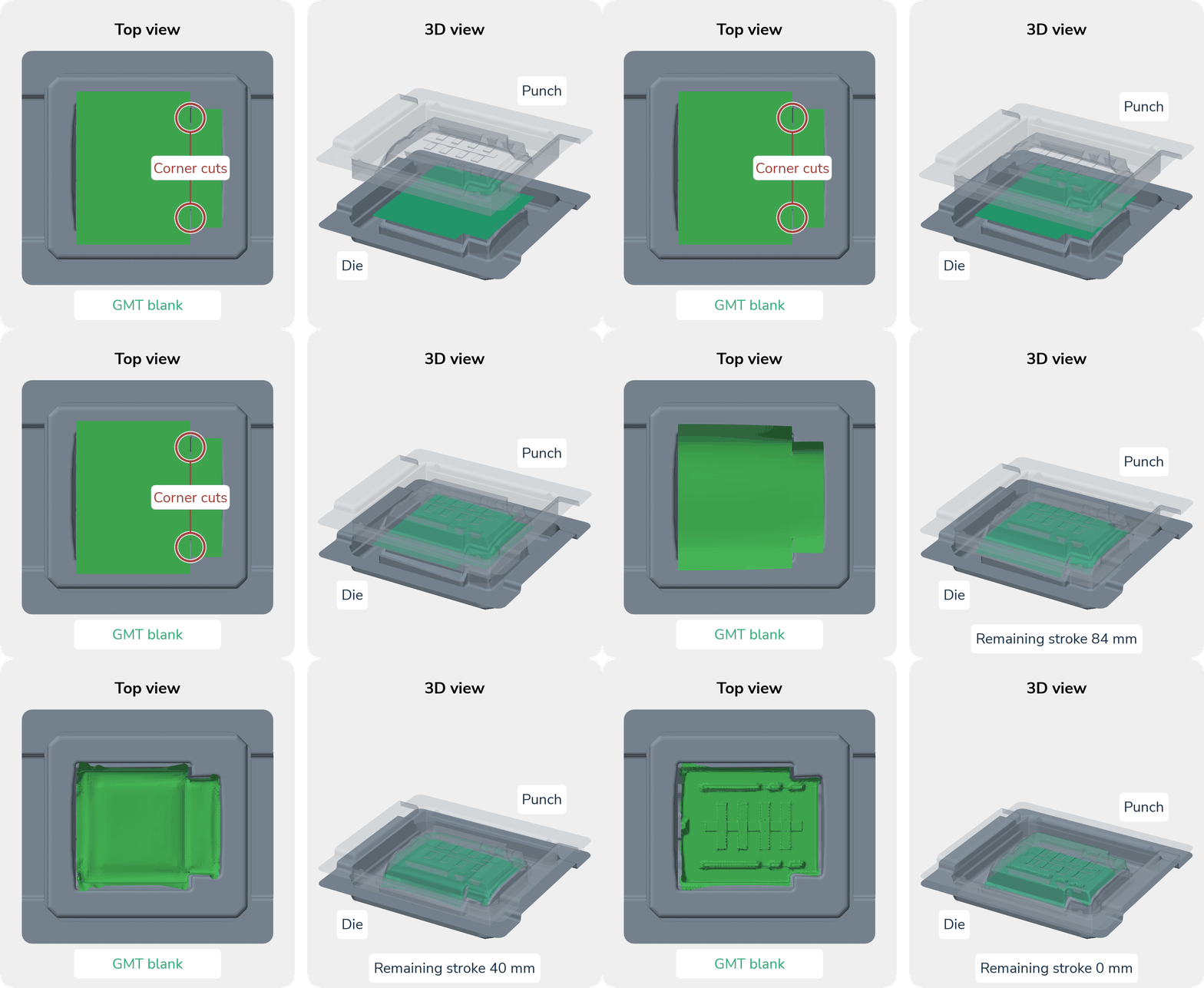
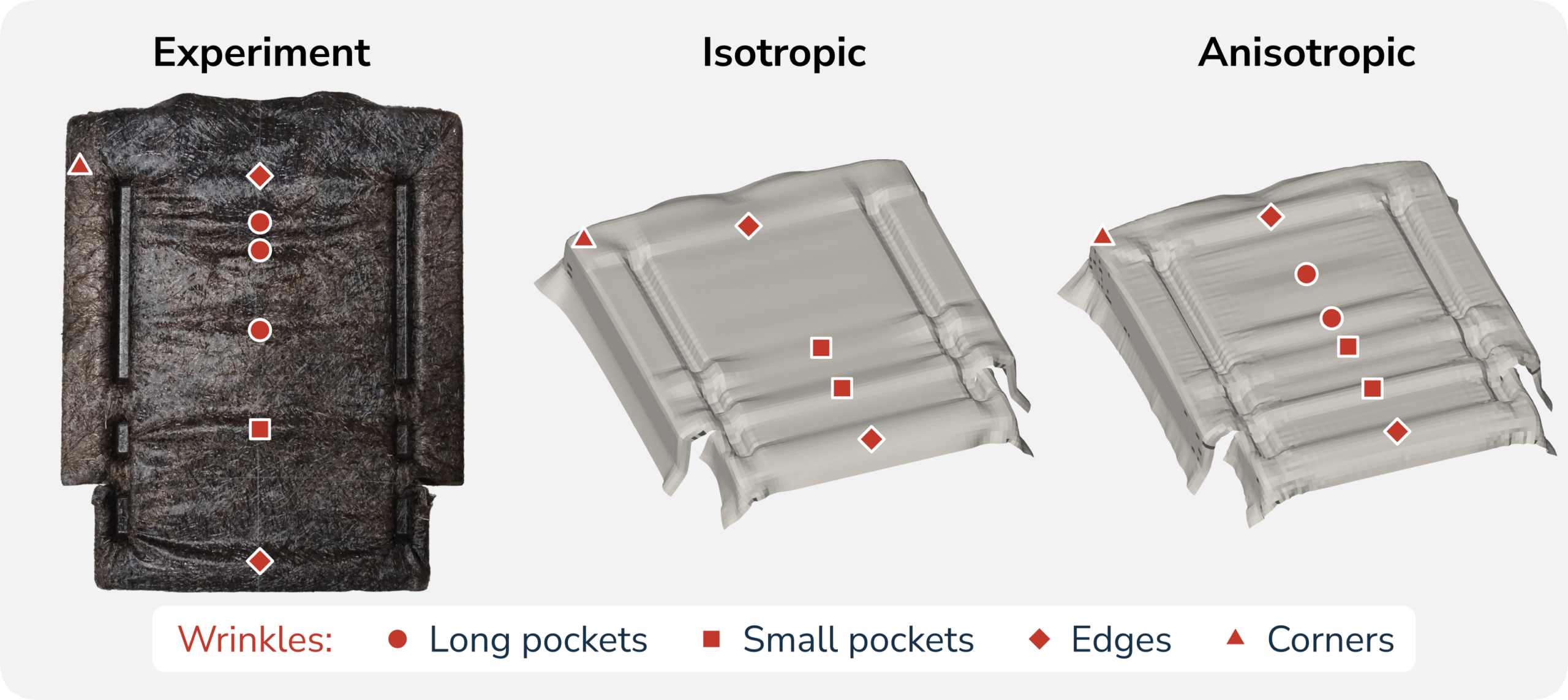
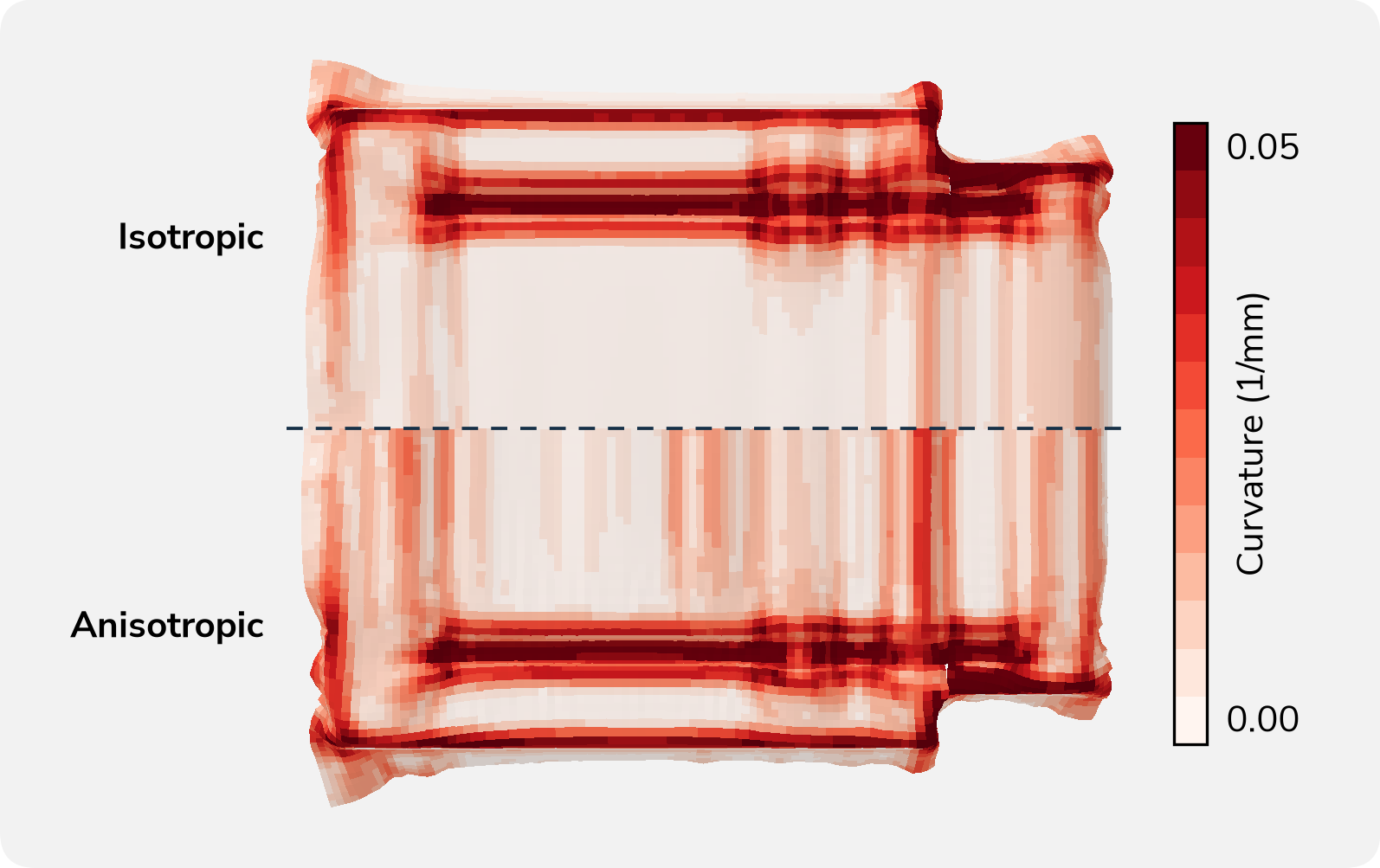
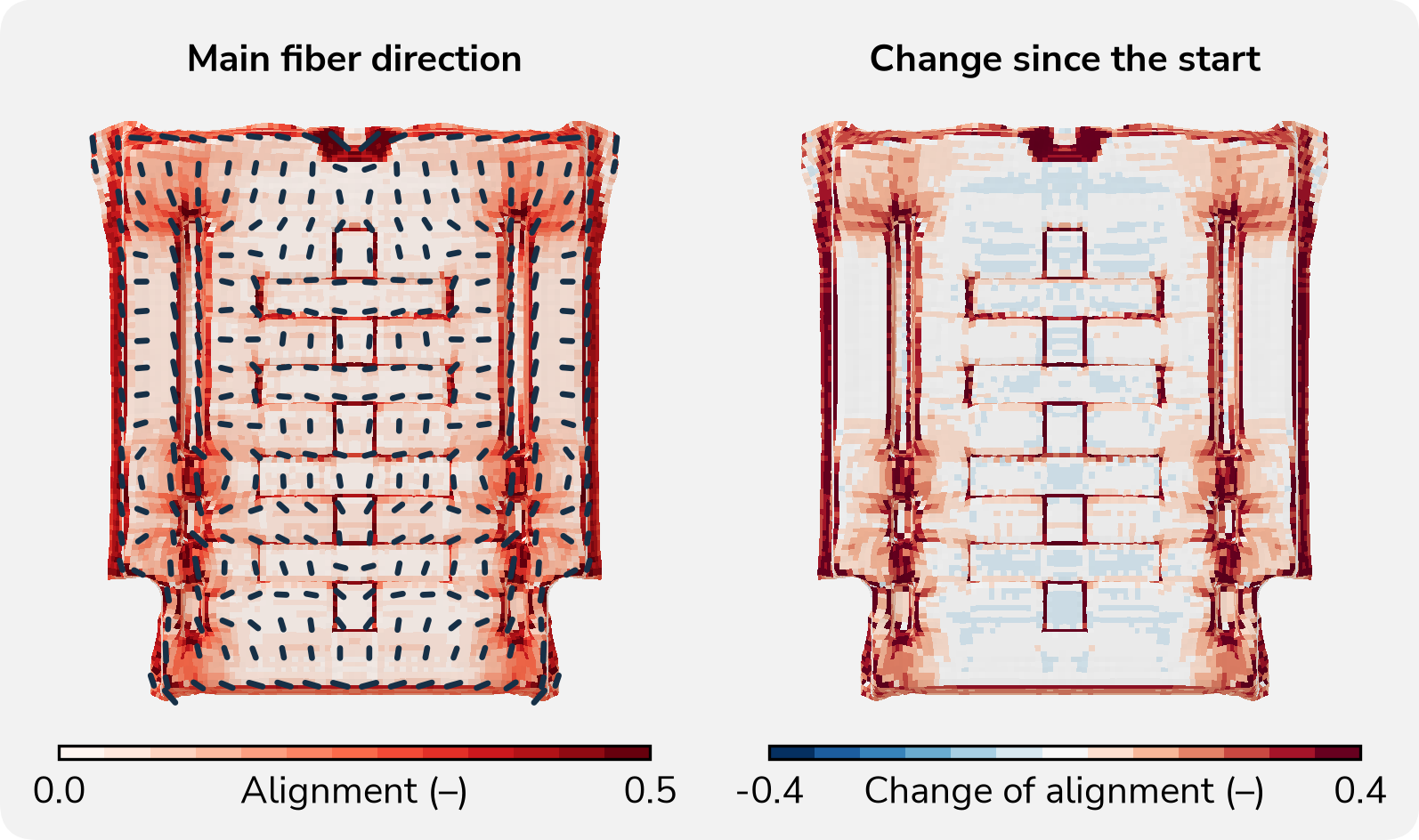
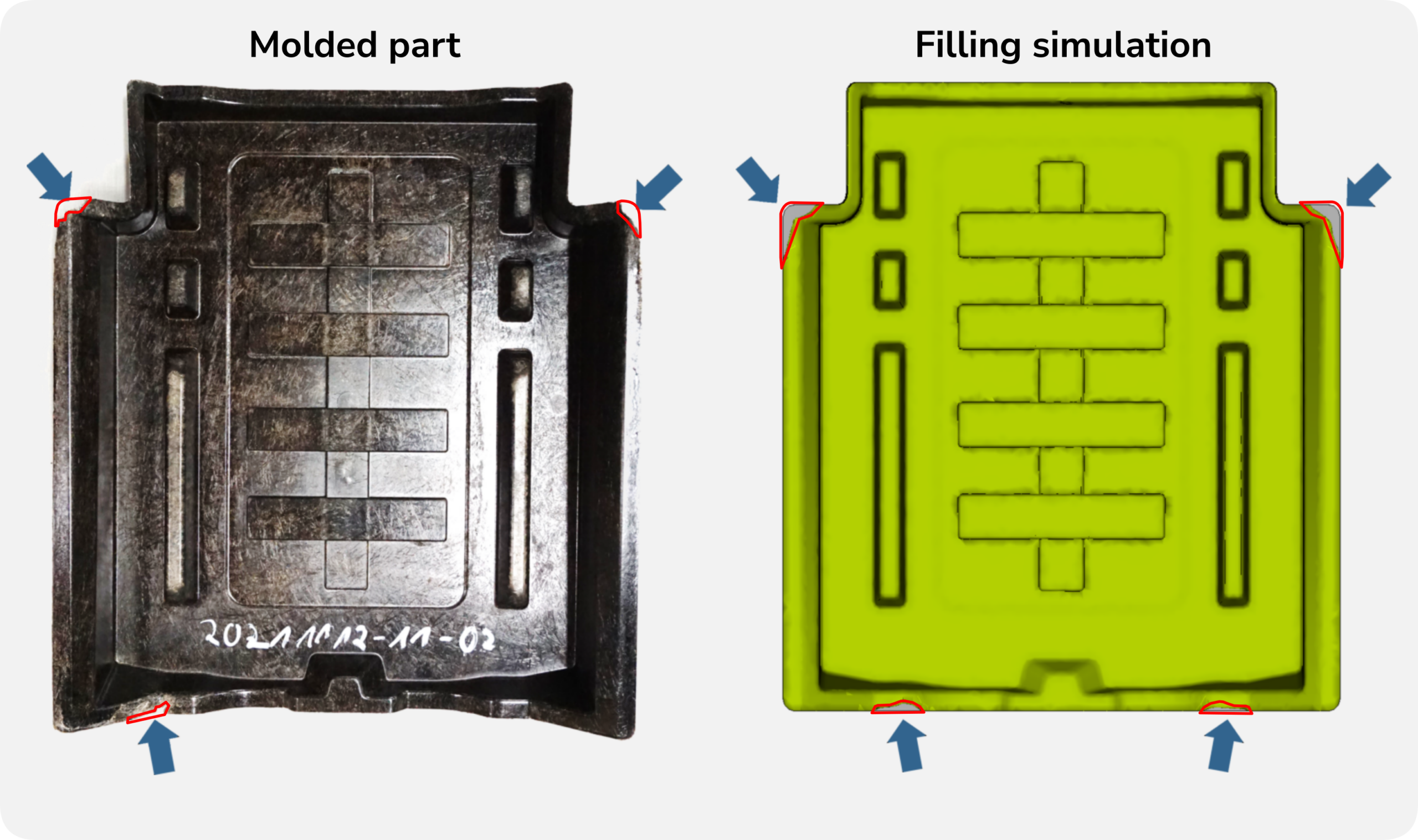
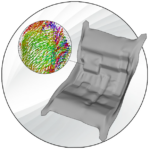
Compression molding of a glass mat thermoplastic (GMT) runs in two stages: the hot blank first forms into the mold, then the material flows and fills it. In the forming stage, the blank can wrinkle. Wrinkles cause visible surface defects and reduce the local strength of the part. Forming also sets the fiber orientation with which filling starts. Conventional filling simulation places the flat blank in the mold by projection, so it shows neither the wrinkles nor the correct fiber orientation after forming. For the seatback outer, the mold already existed, and the investigated GMT was novel and had not been molded into this part before. The task was to develop a simulation approach for the GMT material and to optimize the process within the existing mold. With General Motors, the Fraunhofer Innovation Platform for Composites Research at Western University, Canada, and the Karlsruhe Institute of Technology (KIT), Germany, Simutence simulated the forming of the seatback outer with SimuDrape. The simulation reproduced where the trial parts wrinkled, and filling simulation that started from the formed blank predicted where the part did not fill.