Virtual Process Chain for RTM Battery Housings with Proxxima™ Resin Systems

Integrated molding and structural simulation for the virtual design and validation of RTM battery housings using Proxxima™ resin systems.

Motivation

Battery housings for battery electric vehicles (BEV) are structural components that carry and protect the battery system. They must combine stiffness, impact resistance, package-space efficiency, environmental sealing, and manufacturable large-scale production.

Fiber-reinforced composites are attractive for this application because they offer high specific stiffness and strength, structural tailoring, corrosion resistance, and tailorable thermal behavior compared with metallic solutions. Proxxima™ resin systems provide a novel material solution for this application field and are well-suited for RTM-based composite battery housings.

Together with Fraunhofer ICT and ExxonMobil, Simutence developed a battery housing demonstrator based on Proxxima resin systems. The design intentionally challenged the material system with large flow lengths, neat-resin ribs, and an intrinsic sandwich concept for high impact resistance.


Key takeaways

  • Component and process optimization for a Proxxima-based BEV battery housing demonstrator developed with ExxonMobil and Fraunhofer ICT.
  • Dedicated curing and reactive-viscosity modeling for accurate RTM filling simulation of Proxxima resin systems.
  • Virtual assessment of high-risk design features, including large flow lengths, neat-resin ribs, and intrinsic sandwich manufacturing.
  • RTM tooling investment de-risked by identifying air entrapment risks, resin runners, and flow-front issues before mold manufacturing.
  • First physical shots fully filled the mold as predicted by simulation, confirming the manufacturable design concept.

Project Partners

institute logo

Virtual process chain using Proxxima resin systems

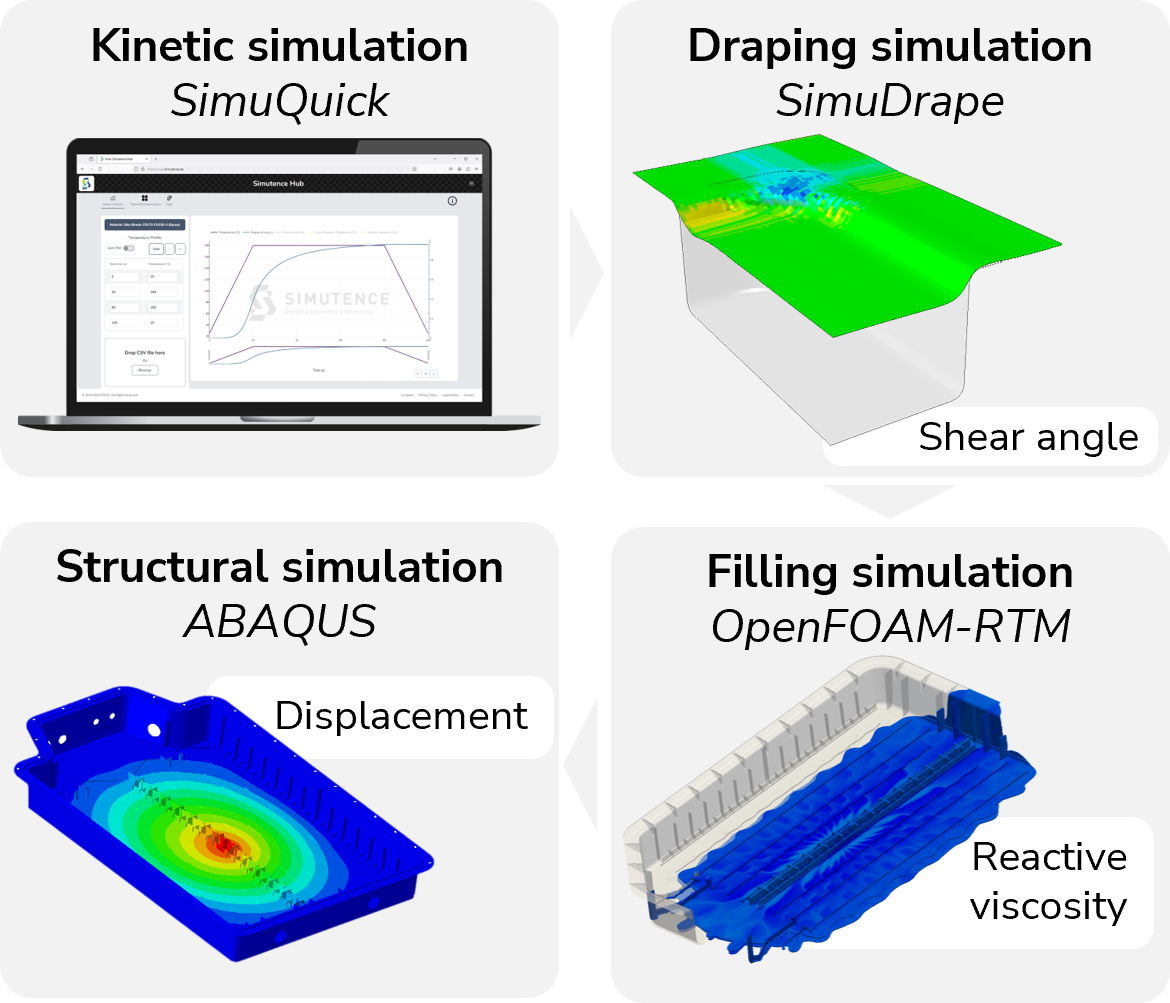
Simutence developed a dedicated virtual process chain for Proxxima resin systems to support the design of the battery housing with respect to both manufacturing behavior and structural performance. Kinetic simulation with SimuQuick Sensor Analysis provides curing, glass-transition, and viscosity data for defined temperature histories, enabling real-time assessment and optimization of processing windows.

Part-specific manufacturing simulation covers draping with SimuDrape and RTM filling with SimuFill for OpenFOAM. These steps support the optimization of component geometry and process concept for manufacturability. Structural simulation uses built-in Abaqus modeling techniques to evaluate battery-housing load cases, including bottom impact. If required, manufacturing effects can be transferred to structural simulation through the Abaqus add-on SimuChain.

Schematic illustration of the Proxxima™ Virtual Process Chain.

Schematic illustration of the virtual process chain using Proxxima resin systems.

Kinetic Simulation (SimuQuick)

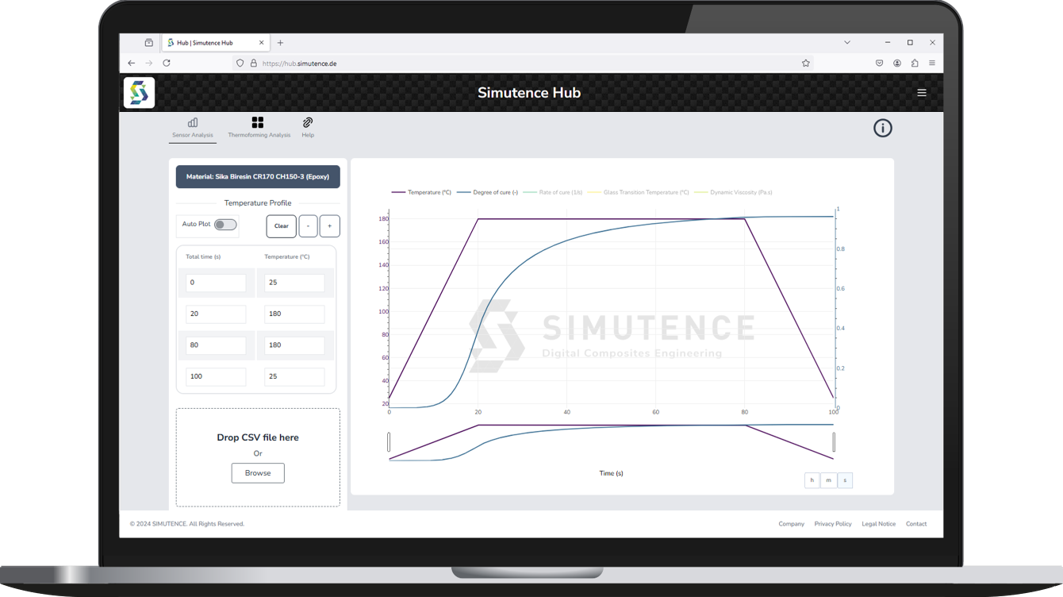
Proxxima resin systems are fast-curing materials, making it essential to understand the relation between temperature history, curing progress, glass transition, and viscosity before defining processing conditions. SimuQuick Sensor Analysis provides direct access to curing-kinetics modeling through an online application, also for simulation laymen.

The workflow is intentionally simple: define or upload a temperature profile and receive instant results for degree of cure, glass-transition temperature, and viscosity. This enables an a priori investigation of processing windows for molding and post-curing, independent of component geometry. The Proxxima™ R3630 C36 material card is available in the SimuQuick material library. Trial access can be provided upon request.

SimuQuick Sensor Analysis.

SimuQuick sensor analysis.

Simutence supports material card creation as a service, from trial planning to simulation-ready material data. For this project, material characterization was performed by Fraunhofer ICT, while Simutence defined the required characterization scope and translated the resulting DSC data into kinetic simulation input.

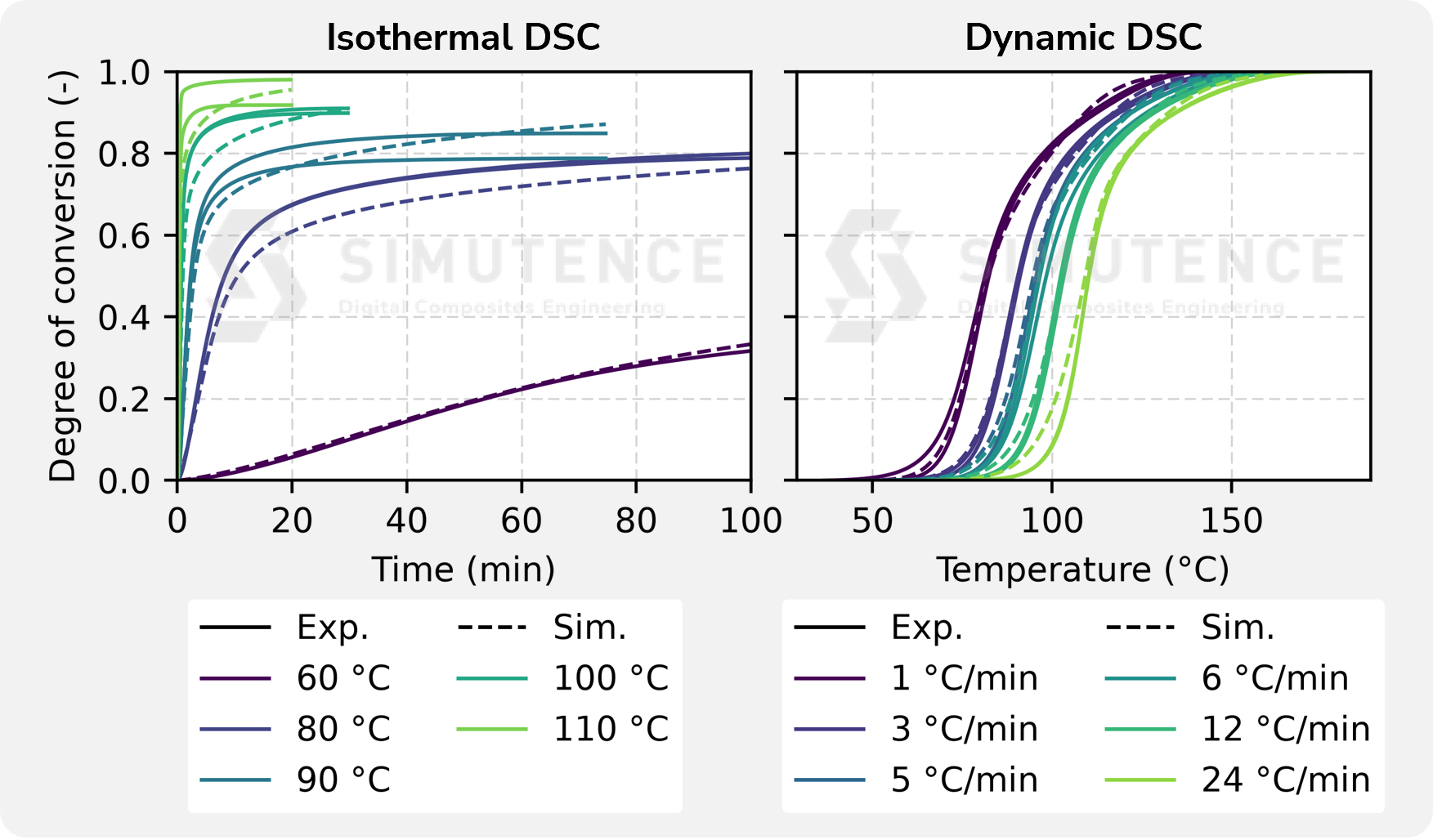
The kinetic material card describes the curing reaction of the Proxxima resin system using a curing-kinetics model. Dynamic and isothermal DSC measurements are assessed with Simutence’s proprietary trial plans and parameter-identification techniques to represent curing progress, glass transition, and viscosity development under different temperature profiles.

The resulting material card supports robust evaluation of process windows and provides a physics-based input for subsequent RTM filling simulation.

Results of isothermal and dynamic DSC.

Results of isothermal and dynamic DSC.

Draping Simulation with SimuDrape

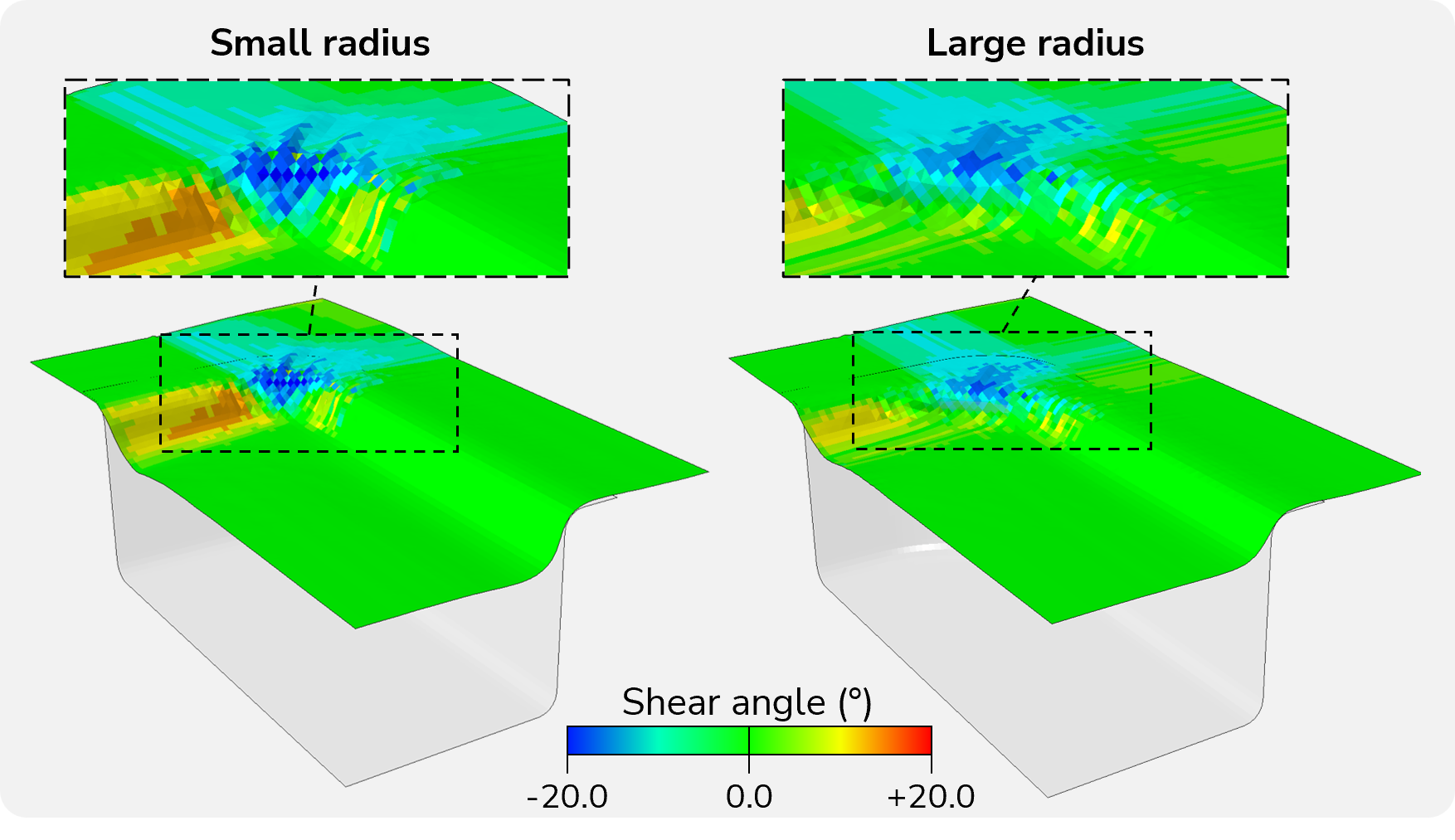
RTM processing requires forming flat textile reinforcements into the three-dimensional part geometry. Draping simulation with SimuDrape is used to assess formability, predict manufacturing effects such as local fiber orientation and fiber volume content, and identify defects such as wrinkling, gapping, or excessive shear. The predicted fiber orientation and local fiber volume fraction support the assessment of permeability-relevant effects for subsequent RTM filling simulation.

For reliable predictions, the textile material behavior must be represented by suitable draping material cards. Simutence applies validated characterization and parameter-identification workflows for membrane, bending, and friction behavior.

For further technical details on SimuDrape and validated NCF draping simulation, see the Simutence case study “Macroscopic Draping Simulation for Non-Crimp Fabrics (NCF)”.

Draping simulation with SimuDrape.

Draping simulation with SimuDrape.

Filling Simulation (SimuFill for OpenFOAM)

SimuFill for OpenFOAM is used to simulate filling and curing behavior of RTM components based on part geometry, material data, injection layout, and process definition. The simulation evaluates filling, flow-front progression, air entrapment risks, required injection pressure, local degree of cure, local viscosity, and processing time. For Proxxima resin systems, the key advantage is the ability to include curing-dependent reactive viscosity in the filling analysis. Simutence developed a dedicated reactive-viscosity model for Proxxima resin systems, enabling a more realistic manufacturability assessment than constant-viscosity or conventional reactive-viscosity approaches.

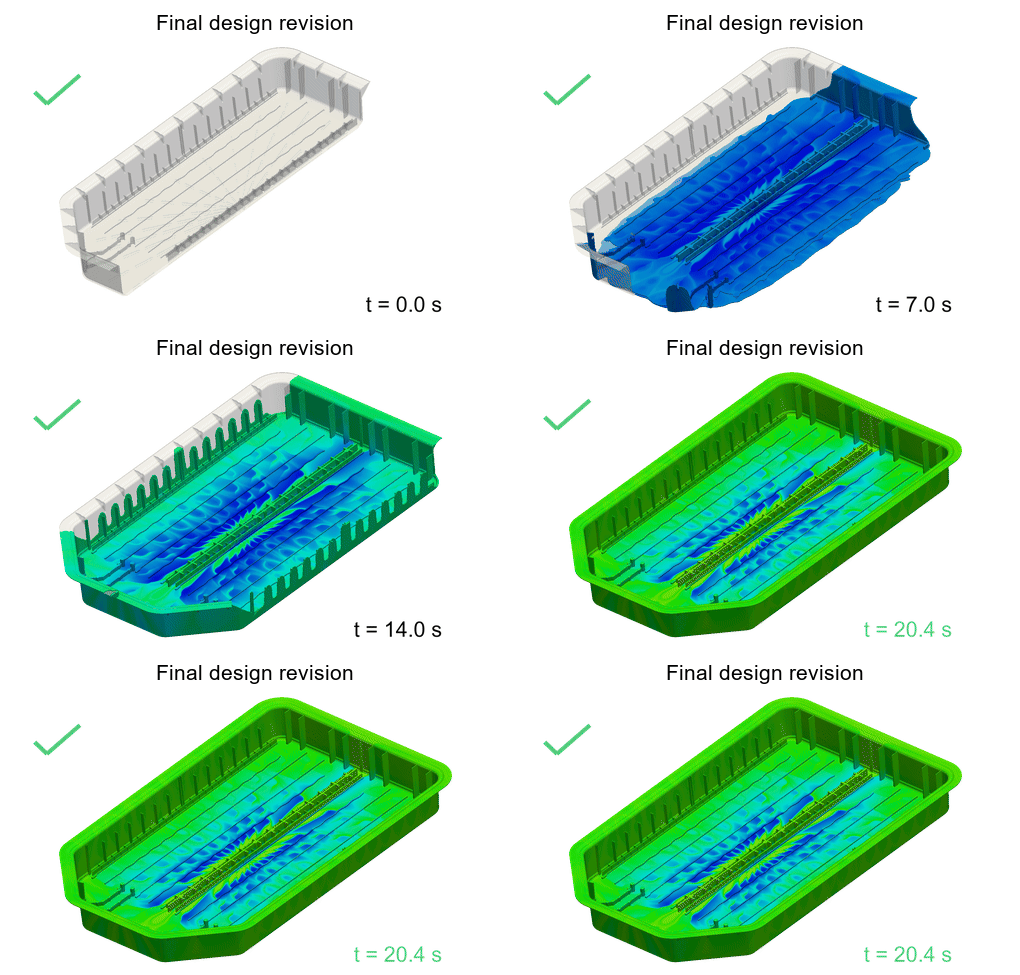
Optimized RTM Fill Front Progression: SimuFill Simulation of the Proxxima™ Battery Housing.

Optimized RTM fill front progression: SimuFill simulation of the Proxxima-based battery housing.

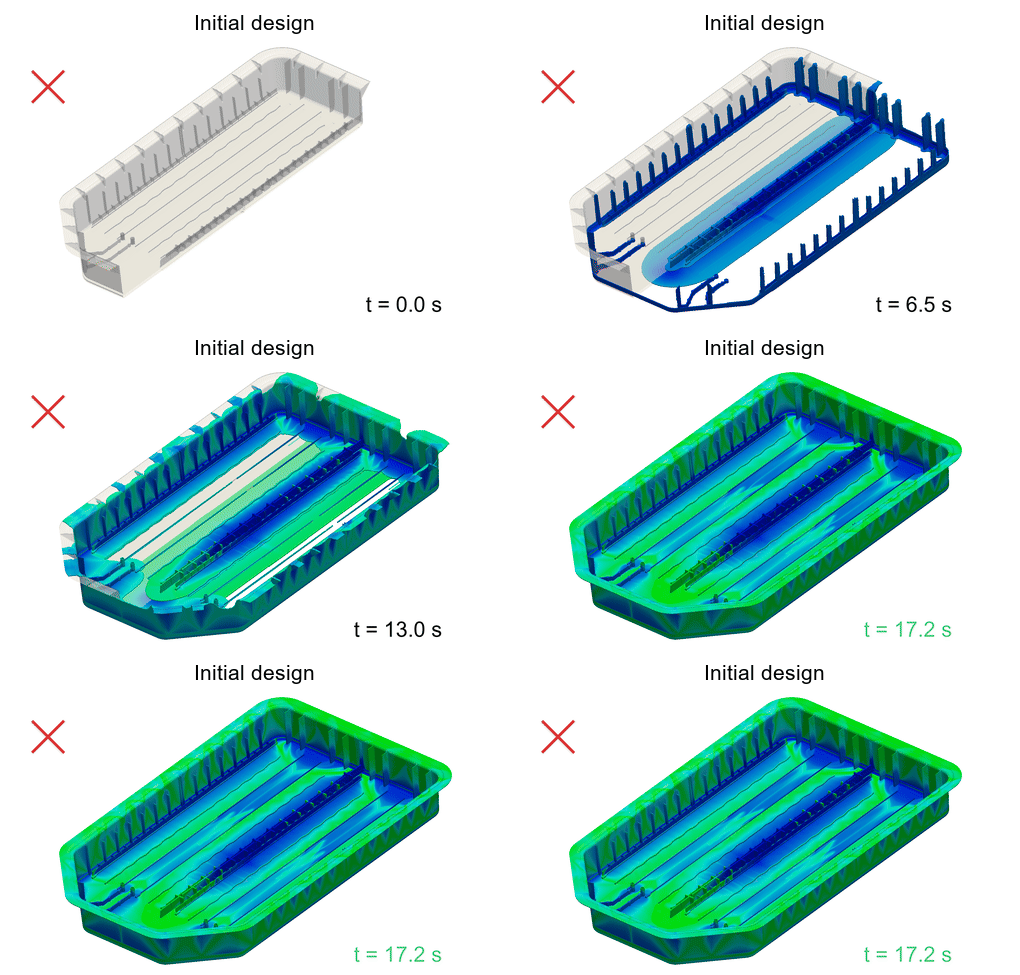
RTM tooling requires significant upfront investment, making early manufacturability validation essential. In the initial battery housing CAD, circumferential resin runners enclosed a large air volume and created a high risk of air entrapments. Virtual design revisions led to a manufacturable concept with a controlled elliptical flow front. Internal resin distribution channels incorporated into the sandwich core, combined with neat-resin ribs, helped control flow resistance and reduce the required injection pressure. The first physical shots confirmed the simulation prediction: the mold filled completely as expected.

Initial RTM Filling Simulation Revealing Air Entrapment Risks in the Proxxima™ Battery Housing.

Initial RTM filling simulation revealing air entrapment risks in the Proxxima-based battery housing.

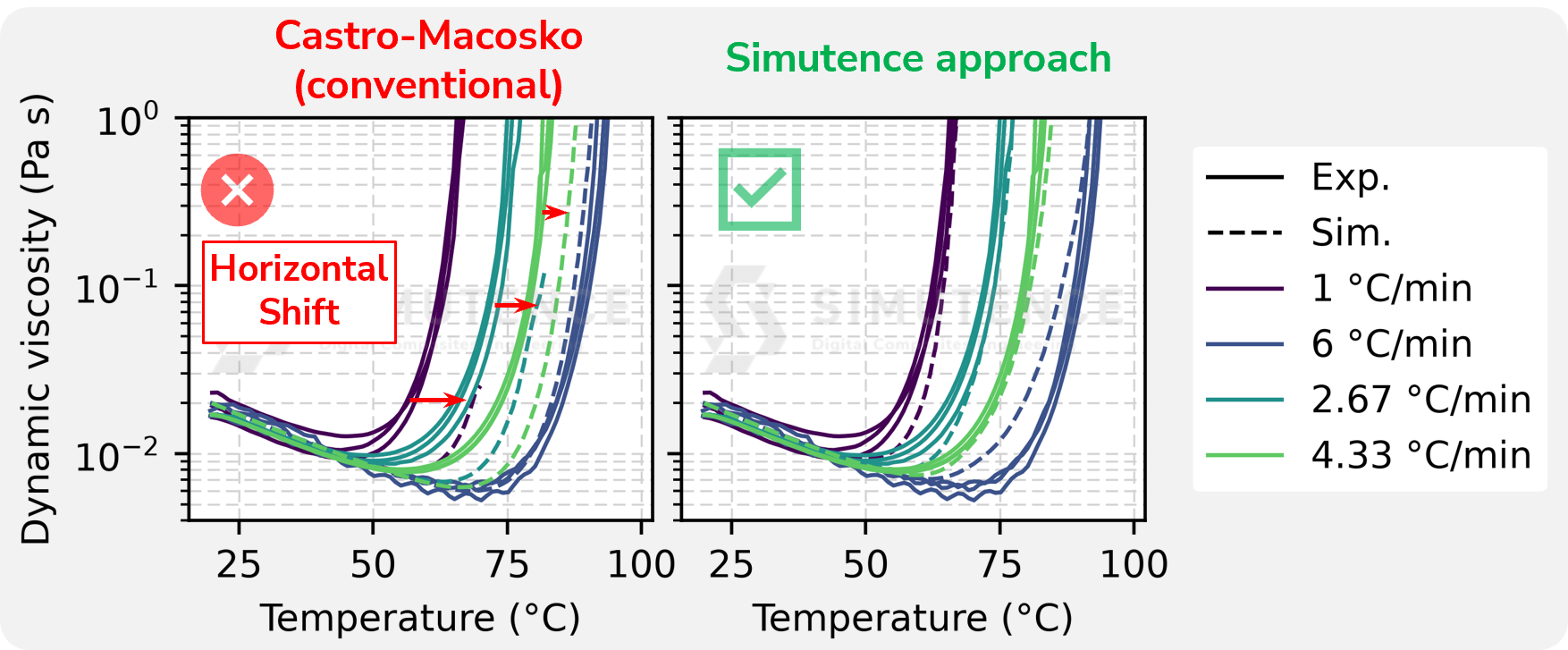
Conventional reactive-viscosity models, such as Castro–Macosko-type approaches, are not sufficient to describe the viscosity development of Proxxima resin systems. Parallel-plate rheometer measurements at different heating rates showed that the measured viscosity evolution could not be represented accurately with the conventional Castro–Macosko approach. Simutence therefore developed a dedicated reactive-viscosity model for the Proxxima resin systems. The dedicated model describes viscosity as a function of temperature and degree of cure and accurately reproduces the rheometer characterization data.

Reactive Viscosity Model Validation for Proxxima™: Castro-Macosko vs. Simutence Approach Across Multiple Heating Rates

Reactive viscosity model validation for Proxxima resin systems: Castro-Macosko vs. Simutence approach across multiple heating rates.

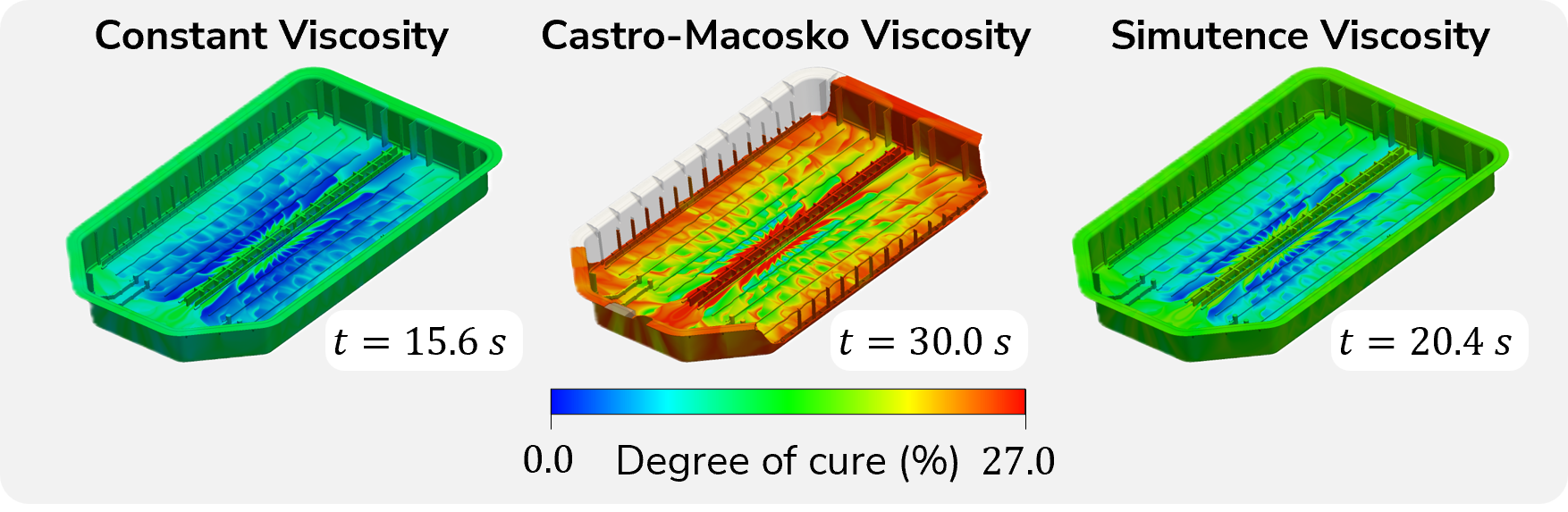
A part-level comparison of viscosity-modeling approaches shows that reliable filling simulation requires both an accurate curing model and an accurate reactive-viscosity model. Constant-viscosity assumptions overestimate filling capability because curing and the resulting viscosity increase are neglected. The conventional Castro–Macosko approach shows the opposite limitation for Proxxima resin systems simulation: it overestimates the viscosity increase with degree of cure and therefore delivers overly conservative part-level results. Under identical processing conditions, this can predict an unfilled mold, while the Simutence model predicts correctly complete filling.

Comparison of viscosity modeling approaches for Proxxima™ RTM filling simulation: Constant, Castro-Macosko, and Simutence reactive viscosity models.

Comparison of viscosity modeling approaches for Proxxima-based RTM filling simulation: Constant, Castro-Macosko, and Simutence reactive viscosity models.

Experimental Validation

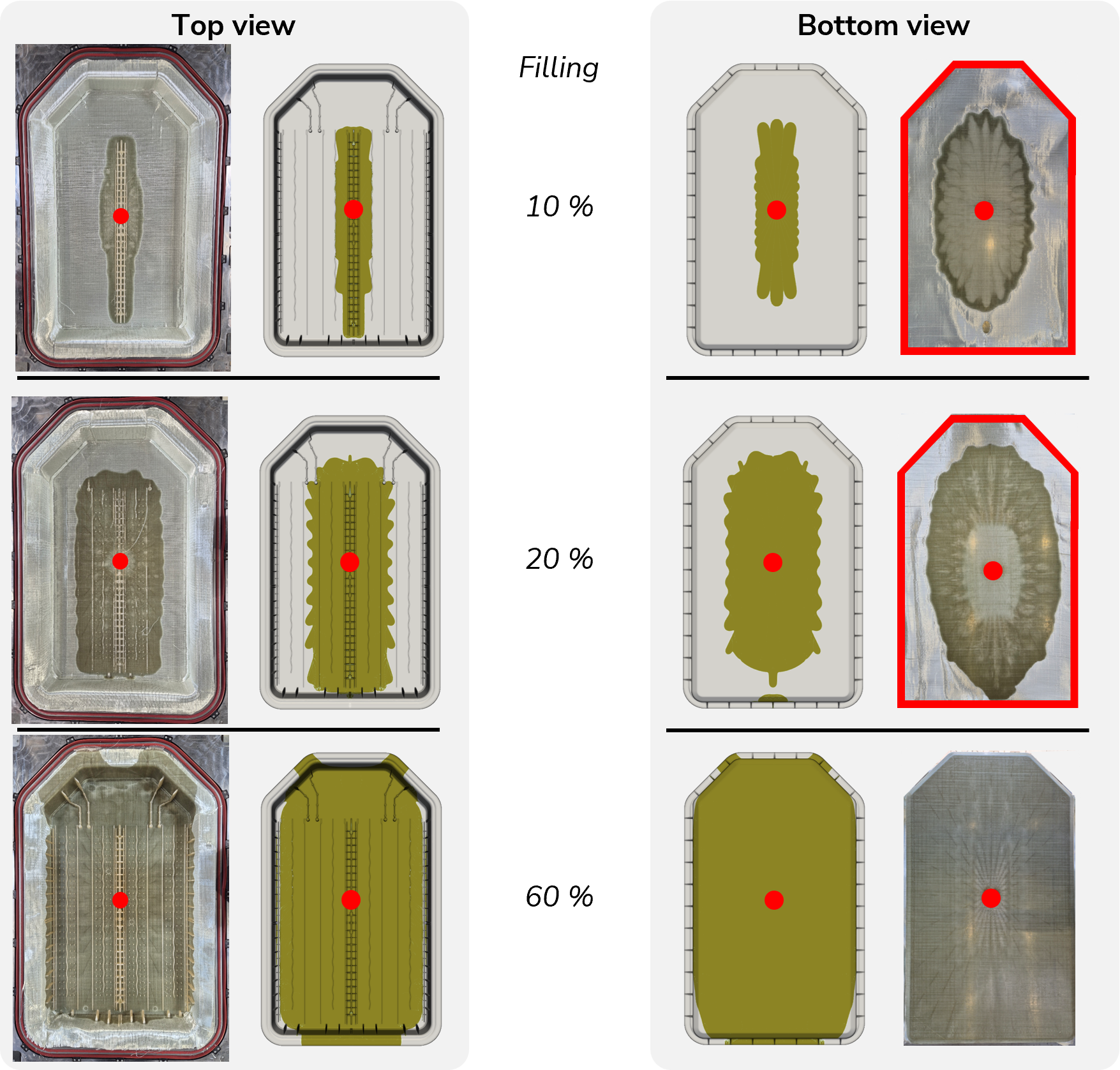
The predicted filling behavior was validated against physical RTM short shots. Injection was interrupted at defined points in time, so that the resulting resin distribution in the part could be compared directly with the flow front predicted by SimuFill for OpenFOAM under the same processing conditions.

The observed flow front progression followed the simulated sequence. Resin first spread longitudinally along the central rib, driven by the internal resin distribution channels. It then advanced uniformly from the center towards all enclosure walls, forming the controlled elliptical flow front intended by the design revisions. Finally, the resin climbed the enclosure walls, aided by the wall-mounted neat-resin ribs, which act as preferential flow paths and thereby limit the required injection pressure.

Both the sequence and the shape of the flow front show good agreement between simulation and experiment, with no indication of the air entrapment identified as a risk in the initial design. The validation therefore confirms that the dedicated curing and reactive-viscosity models for Proxxima resin systems capture the relevant filling physics with sufficient accuracy to support design and tooling decisions.

Comparison of experimental short shots and predicted flow front at 10 %, 20 %, and 60 % filling, shown in top and bottom view; the injection point is marked in red.

Comparison of experimental short shots and predicted flow front at 10 %, 20 %, and 60 % filling, shown in top and bottom view; the injection point is marked in red.

Structural Simulation (Abaqus)

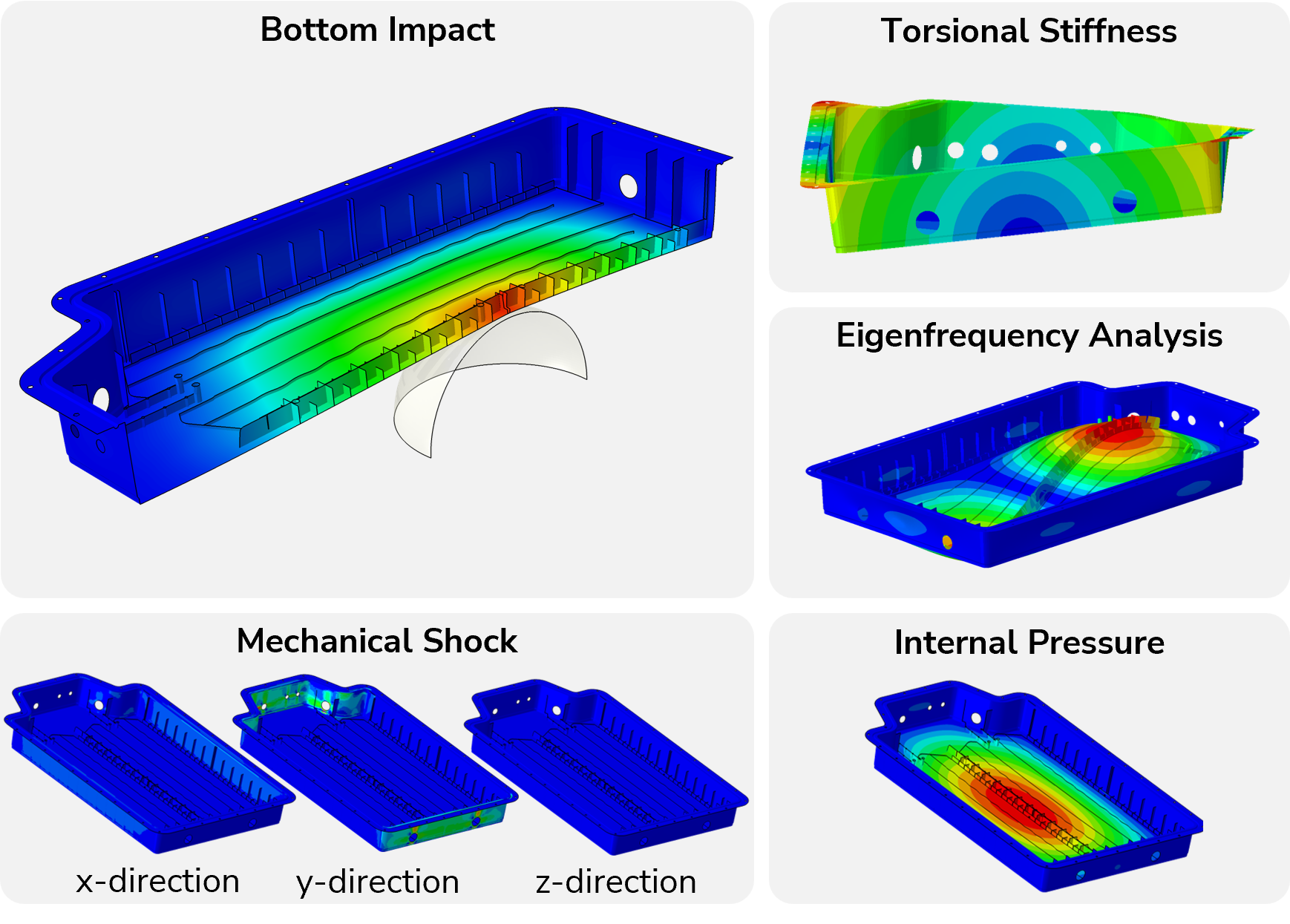
Structural simulation with built-in Abaqus modeling techniques was used to evaluate the battery housing against load cases derived from industrial requirements for BEV battery enclosures. The analysis covered stiffness, modal behavior, internal pressure, mechanical shock, and bottom impact to assess both structural integrity and battery protection.

The torsional stiffness analysis evaluates the contribution of the housing to the vehicle body-in-white stiffness. Eigenfrequency analysis checks whether the first natural frequencies are sufficiently high to avoid excitation from road-induced vibration. Internal pressure represents thermal-runaway and venting scenarios, while mechanical shock mimics crash-related component loading.

A key design target was bottom impact resistance. This load case is often addressed by a separate underbody protection plate. The intrinsic sandwich design of the Proxxima-based battery housing enables bottom impact loads to be absorbed within the housing itself, allowing the underbody protection function to be integrated into the structural battery housing concept. The developed demonstrator fulfilled the considered load cases.

FEA load case assessment of the Proxxima™ RTM battery housing.

FEA load case assessment of the Proxxima-based RTM battery housing.

Conclusion: Integrated Process-Structure Optimization

The Proxxima-based battery housing demonstrator required a consistent evaluation of material behavior, manufacturability, and structural performance. The virtual process chain connected kinetic simulation, draping, RTM filling, and structural simulation before tool manufacturing and physical trials. This was essential because fast curing, large flow lengths, neat-resin ribs, and the intrinsic sandwich concept created coupled material, process, and design challenges.

The integrated workflow enabled targeted design revisions before committing to RTM tooling manufacturing. Critical manufacturability risks in the first CAD were identified virtually, the filling concept was improved through internal resin distribution channels, and structural load cases were evaluated against the intended battery-housing function. The result was a manufacturable demonstrator that filled successfully in the first shots and demonstrated how simulation supports the transfer of Proxxima resin systems from material potential to industrial component design.

Any questions?

Do not hesitate to get in contact with us if you have any questions or if you are interested in a collaboration. We are pleased if you leave us a message!